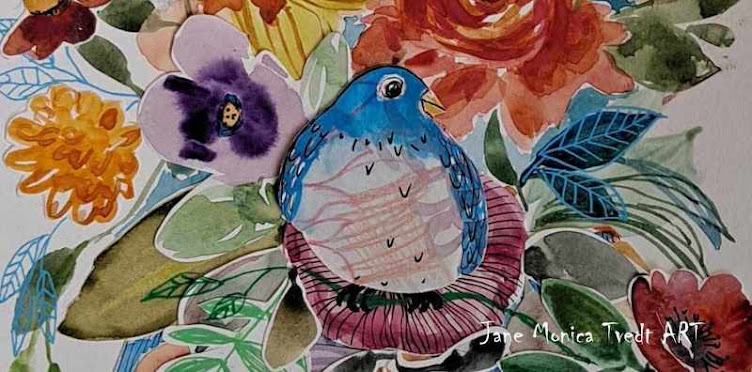

Building a junk journal collection can be a delightful way to explore your creativity and preserve memories. The last time i counted them, i think it was over 100 small and large journals. That is lots of joy.


Here are some ideas to help you curate your collection:
Theme-Based Journals: Create junk journals centered around specific themes or interests, such as travel, nature, vintage, or favorite colors. Each journal can be dedicated to capturing memories, experiences, and ephemera related to that theme.
Seasonal Journals: Design junk journals to reflect the seasons of the year, with each journal capturing the sights, sounds, and sensations of a particular season. Use seasonal colors, motifs, and imagery to evoke the essence of each time of year.
Memory Keeping Journals: Use junk journals as a way to document and preserve memories, mementos, and milestones from your life. Include photos, ticket stubs, letters, and other memorabilia to create a tangible record of your experiences.


Artistic Expression Journals: Use junk journals as a creative outlet for artistic expression. Experiment with different techniques, mediums, and styles to create visually stunning and eclectic journals that reflect your unique artistic voice.
Collaborative Journals: Invite friends, family members, or fellow creatives to collaborate on junk journals together. Each person can contribute their own pages, artwork, and stories, resulting in a rich and diverse collection of shared memories and creativity.

On my table in the process of making junk journals

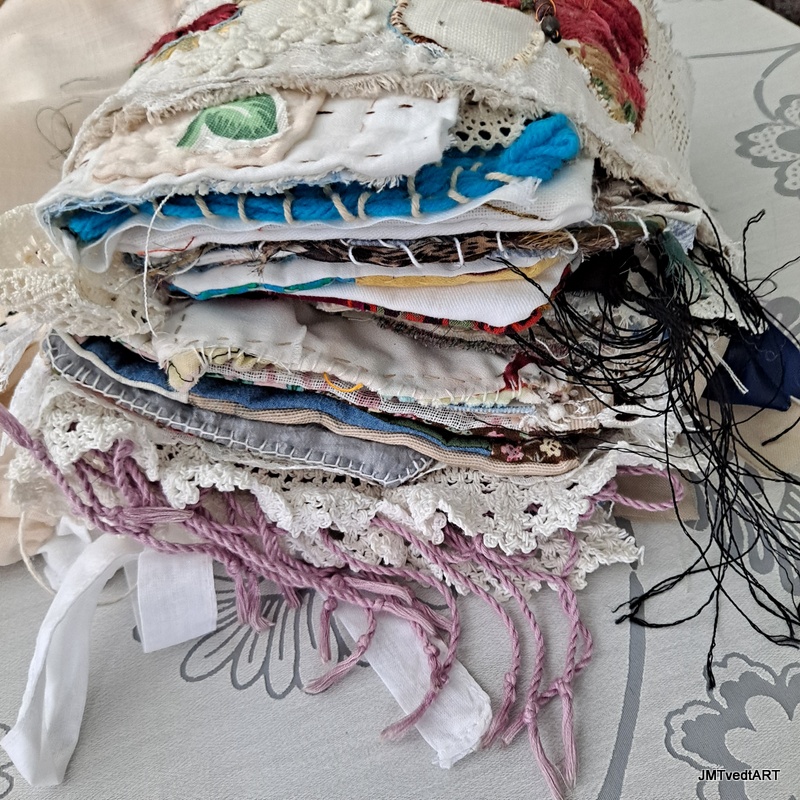
Slow stitched journals
Miniature Journals: Create miniature junk journals that are small enough to fit in your pocket or purse. These tiny journals can be perfect for capturing spontaneous thoughts, sketches, or observations on the go.
Thrifted Treasures Journals: Explore thrift stores, flea markets, and antique shops to find unique and interesting materials for your junk journals. Incorporate vintage postcards, fabric scraps, old photographs, and other found objects into your journals to add character and charm.
Mixed Media Mash-Up Journals: Combine various art mediums and techniques in your junk journals to create dynamic and textured pages. Experiment with collage, painting, stamping, embroidery, and other mixed media techniques to bring your journals to life.

Storytelling Journals: Use junk journals as a platform for storytelling, whether it's through personal anecdotes, fictional narratives, or poetry. Let your imagination run wild as you weave tales and create characters within the pages of your journals.
Reflection and Gratitude Journals: Dedicate junk journals to self-reflection, mindfulness, and gratitude. Use prompts, quotes, and affirmations to inspire introspection and cultivate a sense of gratitude for the blessings in your life.
By curating a diverse collection of junk journals, you can explore different themes, techniques, and styles while creating a rich tapestry of memories, creativity, and self-expression.

"Let your pen dance across the pages, filling them with the colors of your soul.
Happy Journaling ❤


