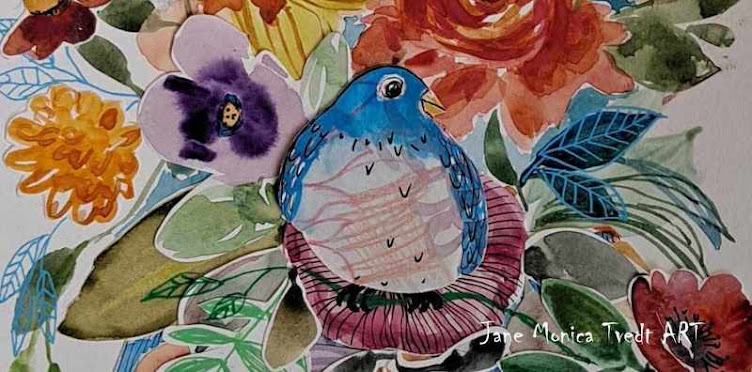
My very first watercolorpaint where I used a reference photo.
"The good watercolors take a lifetime - plus a half an hour."
Using reference photos of flowers for flower paintings is a fantastic way to capture their beauty and intricacies with accuracy. Here's how to make the most of reference photos when painting flowers:
Choose High-Quality Photos: Select reference photos that are clear, well-lit, and high-resolution. This ensures that you can see the details of the flowers, such as petal texture, color variations, and subtle shadows, which will aid in creating a realistic painting.
Consider Composition: Pay attention to the composition of the reference photo. Look for interesting angles, perspectives, and arrangements of flowers that will translate well into a painting. You may need to crop or edit the photo to achieve the desired composition.
study the Lighting: Examine the lighting in the reference photo, as it will influence the mood and atmosphere of your painting. Note where the light source is coming from and how it affects the shadows, highlights, and overall tonal values of the flowers.
Observe Color and Texture: Study the colors and textures of the flowers in the reference photo. Notice the subtle variations in hue, saturation, and value, as well as any patterns or markings on the petals. This will help you accurately mix paint colors and recreate the texture of the flowers in your painting.
Focus on Details: Pay attention to the details of the flowers, such as the shape of the petals, the arrangement of the stamens and pistils, and any imperfections or irregularities. These details contribute to the realism and authenticity of your painting.
Capture the Essence: While it's essential to capture the details of the flowers, also aim to capture their essence and beauty. Focus on conveying the delicate shapes, graceful curves, and vibrant colors that make each flower unique and captivating.
Use Multiple Photos: Don't feel limited to using just one reference photo. Experiment with combining elements from different photos or creating composite images to achieve the desired composition and visual impact in your painting.
Add Your Creative Touch: While reference photos provide valuable guidance, don't be afraid to interpret and interpret them in your own way. Use your artistic intuition and creativity to infuse your painting with your unique style, expression, and interpretation of the flowers.
By using reference photos effectively, you can enhance your flower paintings with accuracy, depth, and realism, while also infusing them with your own artistic vision and creativity, Or you can make them totally abstract and naive. But anyway, they give inspiration and joy. Be creactive.