Showing posts with label slowstitchedbags. Show all posts

Sunday, May 26, 2024

Looking at my past Slow stitching project & finding inspiration for a new project


Finding inspiration from past slow stitching projects to create new ones is a wonderful way to build on my own creativity. So I am glad i document in photos of what I do.

Here’s how you can reflect on your previous work and use it as a springboard for new projects:

Steps to Find Inspiration from Past Projects

1. Reflect on Your Previous Work

Review Your Projects: Take some time to look through your past slow stitching projects. Notice the techniques, colors, patterns, and themes you used.

Identify Favorites: Pick out the projects you enjoyed the most or those you feel were particularly successful. Think about why you liked them – was it the color palette, the texture, the pattern, or the overall design?

Note Challenges: Consider any challenges you faced during these projects and how you overcame them. This reflection can provide insights into new techniques or improvements for future work.


2. Extract Key Elements

Techniques: Identify the stitching techniques you used (e.g., embroidery, appliqué, beading) and decide which ones you want to incorporate again or explore further.

Color Schemes: Look at the color combinations that worked well and think about how you can use or modify them in your new project.

Patterns and Motifs: Consider the patterns and motifs that were effective or particularly pleasing. Can these be adapted or expanded upon in a new piece?

Textures and Fabrics: Think about the different fabrics and textures you used. Mixing different materials can add depth and interest to your new project.


Remember to take your time, 
because TTT - things take time


"Creativity is allowing yourself to make mistakes.
Art is knowing which ones to keep." – Scott Adams

"The best way to have a good idea is to have a lot of ideas." – Linus Pauling


I am not a big planner, rather more intuitive that leads me into the variation of project from drawing to stitching to making books, painting and watercolor. Its a meditative blissful, and sometimes pineful journey

If you are in the middle of your journey, take all the time you need to learn and grow. Success is replicable. But views along the way aren’t.

Make each day the best day of your life


Winnie the pooh said:

Life is a journey to be experienced, not a problem to be solved.

When life throws you a rainy day, play in the puddles.

We didn’t realize we were making memories, we just knew we were having fun.

Sometimes the thing to do is nothing.

Doing nothing often leads to the very best of something.


Saturday, May 25, 2024

Handstitched & crochet Pompadour Pouch


I Handstitched & crochet Pompadour Pouch.
 I used recydled materials. Good fun to make, and it looks pretty.
Below is some pompadour history.  

History of the Pompadour Pouch

The Pompadour Pouch, also known as a reticule or a drawstring bag, has a rich history dating back to the 18th and 19th centuries. Here's an overview of its development and cultural significance:

Origins and Early History18th Century: The Pompadour Pouch gets its name from Madame de Pompadour (1721-1764), the influential mistress of King Louis XV of France. While it's uncertain if she directly influenced the creation of the pouch, her name became associated with this style of bag.

Fashion Accessory: During the late 18th century, as women's fashion began to change, the bulky pockets sewn into skirts and petticoats became impractical. Dresses became slimmer and more form-fitting, leading to the need for an external accessory to carry personal items.

19th Century Popularity

Regency Era (1811-1820): The reticule became extremely popular during the Regency era in England. These small drawstring bags were often made from luxurious fabrics such as silk and velvet and were decorated with embroidery, beads, and tassels.

Variety of Styles: Reticules came in various shapes and sizes, but the common feature was their drawstring closure. They were carried by women to hold essentials like handkerchiefs, smelling salts, a fan, or a small coin purse.

Symbol of Femininity: The Pompadour Pouch was not just a practical item but also a fashion statement and a symbol of femininity. It allowed women to express their personal style and creativity through the choice of materials and decorations.

20th Century and Beyond

Evolution: As fashion continued to evolve, the Pompadour Pouch saw changes in its design and usage. By the 20th century, handbags became more structured, and the reticule was no longer a common accessory.

Revival: Despite changes in fashion trends, the Pompadour Pouch has seen revivals, particularly in vintage and historical fashion circles. Modern versions of the pouch are often used as evening bags or bridal accessories, appreciated for their classic elegance and nostalgic charm.


Characteristics of the Pompadour Pouch

Drawstring Closure: The defining feature of the Pompadour Pouch is its drawstring closure, which gathers the fabric at the top and secures the contents.

Decorative Elements: These pouches are often richly decorated with embroidery, lace, beads, and tassels, reflecting the styles and craftsmanship of their time.

Materials: Common materials include silk, satin, velvet, and brocade, chosen for their luxurious appearance and feel.

Size and Shape: The size can vary, but they are typically small enough to be carried easily in one hand or hung from the wrist.

Cultural Significance

Fashion and Status: The Pompadour Pouch was a symbol of fashion and status. Women of higher social classes often had more elaborate and finely crafted pouches.

Personal Expression: The design and decoration of the pouch allowed for personal expression, with women often making their own or having them custom-made.

Historical Artifact: Today, antique Pompadour Pouches are valued as historical artifacts, providing insight into the fashion and social customs of the past.


In summary, the Pompadour Pouch is a timeless accessory with a rich history that reflects changes in fashion, society, and personal expression. Its enduring charm continues to inspire modern adaptations and revivals

Enjoy a creactive day ❤


Sunday, May 19, 2024

Some slow slow stitched projects


Slow stitching can be a meditative practice, offering a peaceful and contemplative way to engage with needlework and fabric.


Set the Intention: Begin by setting an intention for your slow stitching meditation. This could be to cultivate a sense of calm, to focus on gratitude, or to simply be present in the moment.


Create a Quiet Space: Find a quiet and comfortable space where you won't be disturbed. Settle into a relaxed position, whether sitting or lying down, and take a few deep breaths to center yourself.

Choose Your Materials: Select your fabric, thread, and needle for stitching. Choose colors and textures that resonate with you and evoke a sense of peace and tranquility


Focus on the Process: As you begin stitching, bring your full attention to the task at hand. Notice the feel of the fabric, the movement of the needle, and the rhythm of your stitches. Allow yourself to become fully immersed in the process of stitching.


Practice Mindfulness: Use your stitching as an anchor for mindfulness, bringing your awareness to the present moment. Notice any thoughts or distractions that arise, and gently guide your attention back to your stitching whenever you find your mind wandering.


Embrace Imperfection: Slow stitching is not about perfectionism; it's about embracing imperfection and allowing yourself to enjoy the process without judgment. If you make a mistake or your stitches aren't perfectly even, simply acknowledge it and keep stitching.


Cultivate Gratitude: As you stitch, take moments to reflect on what you're grateful for in your life. Express gratitude for the simple joys, the beauty of nature, or the gift of creativity.

Savor the Silence: Allow yourself to savor the silence and stillness of the moment as you stitch. Let go of any need for external stimulation and relish the quietude of your stitching meditation.


End with Reflection: When you feel ready to conclude your stitching meditation, take a few moments to reflect on your experience. Notice how you feel physically, mentally, and emotionally after engaging in this practice.

Express Appreciation: Finally, express appreciation for yourself for taking the time to nourish your spirit through slow stitching meditation. Carry the sense of peace and mindfulness you've cultivated with you as you go about the rest of your day.


By incorporating slow stitching into your meditation practice, you can cultivate a sense of calm, presence, and gratitude while engaging in a creative and soothing activity. Enjoy the journey of stitching and the mindful awareness it brings to each stitch.

Wish you a happy
creActive day!
❤


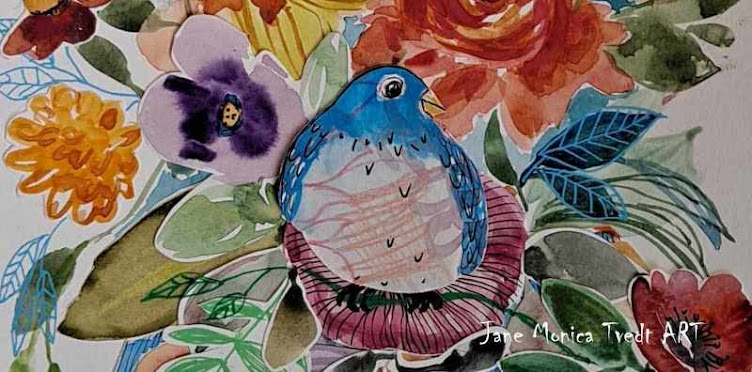
I am back on Instagram as @jmtvedtart - watercolor flowers summer vibes

  Watercolor collage - Summer vibes  "Intuition is the GPS of the soul." — Unknown "Go with your gut feeling." — Unknown...